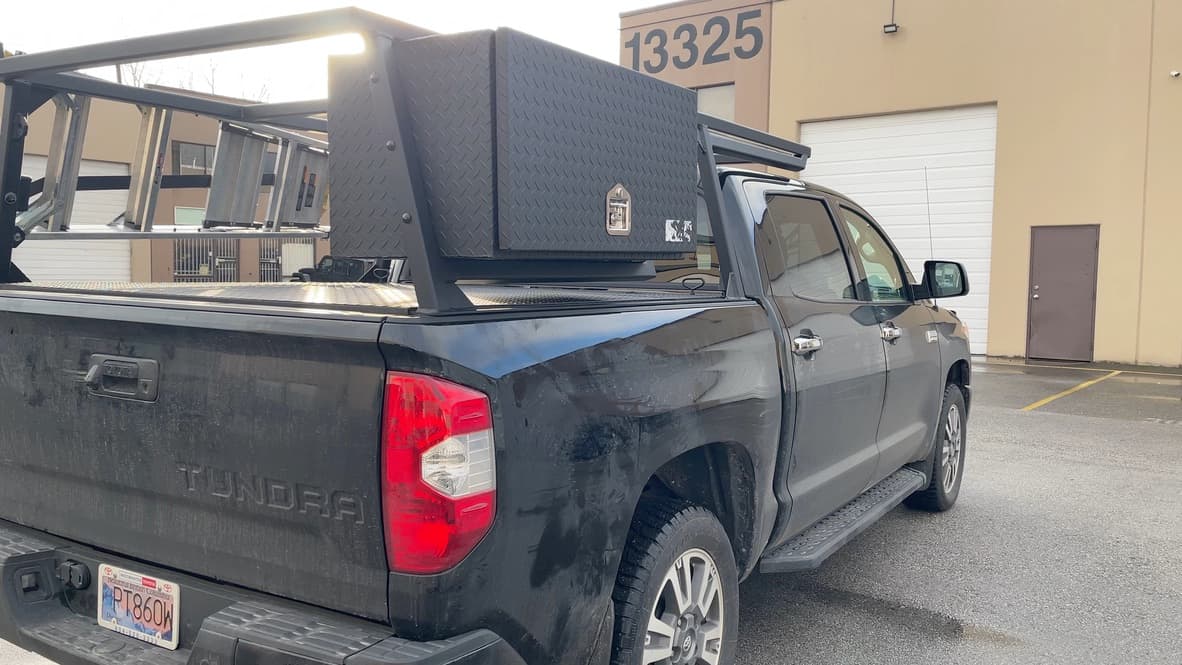
Whether you’re a tradesperson hauling materials across Metro Vancouver or a weekend adventurer carrying bikes and kayaks into the mountains, knowing your truck rack’s weight capacity is more than just a technical detail — it’s about safety, efficiency, and getting the most from your vehicle. Overloading can damage your rack, your truck, and even put you at risk on the road.
At Ridge Rack, we specialize in designing and building custom truck racks right here in Surrey, BC, for everything from light-duty daily use to heavy-duty commercial work. Our Service Truck Racks are purpose-built to match your truck, your load, and your lifestyle, so you always have the right balance of strength and performance.
In this guide, we’ll explore how much weight a truck rack can hold, the factors that affect capacity, and how to choose a rack that works for your needs.
Understanding Truck Rack Weight Capacity

A truck rack’s capacity depends on:
-
The rack’s material (aluminum vs. steel)
-
Its design and construction
-
Your truck’s own load rating (bed or roof limits)
Light-Duty vs. Medium-Duty vs. Heavy-Duty Racks
Light-Duty (135–270 kg)
-
Best For: Ladders, kayaks, light tools, small cargo
-
Materials: Mostly aluminum for corrosion resistance and better fuel economy
-
Advantages: Lightweight, easy to remove, minimal impact on handling
Medium-Duty (270–450 kg)
-
Best For: Construction tools, moderate lumber loads, multiple ladders, recreational gear
-
Materials: Reinforced aluminum or steel
-
Advantages: Stronger load support, more versatile, good balance between weight and strength
Heavy-Duty (545 kg and up)
-
Best For: Commercial loads like steel pipes, scaffolding, heavy timbers
-
Materials: Steel for maximum durability
-
Advantages: Highest load rating, long lifespan under demanding use
Factors That Affect How Much a Truck Rack Can Hold
-
Truck Manufacturer Load Limits
-
Check your vehicle’s Gross Vehicle Weight Rating (GVWR) and roof/bed capacity before choosing a rack.
-
-
Rack Material & Build Quality
-
Aluminum is lighter but may have lower maximum capacity; steel is heavier but stronger.
-
-
Weight Distribution
-
Even a strong rack can be compromised if weight isn’t balanced across supports.
-
-
Climate & Environmental Conditions
-
Snow, ice, and rain add extra weight; corrosion can weaken materials over time.
-
Safety & Legal Considerations in Canada
Overloading a rack doesn’t just risk your gear — it can lead to structural damage, reduced fuel efficiency, and even legal fines. In BC, commercial and personal vehicles must adhere to provincial load regulations. Loads must be secured, evenly distributed, and within the stated capacity of both the rack and the vehicle.
Choosing the Right Rack for Your Needs
When selecting a rack, think about:
-
What you’ll carry most often (and its weight)
-
How often you’ll load and unload
-
Where you’ll be driving (city, highway, off-road)
Working with a local fabricator like Ridge Rack means your rack is designed for your actual usage — not just a generic average. We measure, build, and finish each rack to ensure it fits your truck perfectly and safely handles your load.
A truck rack’s weight capacity isn’t just a number — it’s the foundation of safe, efficient hauling. From light-duty aluminum racks for occasional use to heavy-duty steel racks for serious commercial loads, knowing your capacity and matching it to your needs is essential.
📍 Ready to find the perfect fit? Explore our full range of Service Truck Racks and discover how Ridge Rack can build a custom solution for your work or adventure.

Frequently Asked Questions
1. How much weight can a typical truck rack hold in Canada?
Most light-duty racks handle 135–270 kg, medium-duty 270–450 kg, and heavy-duty racks 545 kg or more. Always check your truck’s own load rating before choosing a rack.
2. What’s the difference between light-, medium-, and heavy-duty racks?
The main differences are weight capacity, materials used, and intended use — from light gear transport to heavy industrial loads.
3. Does the material affect weight capacity?
Yes. Aluminum racks are lighter and often more fuel-efficient, while steel racks offer maximum strength for heavier loads.
4. Can I increase my rack’s weight limit?
No. Exceeding the manufacturer’s rating can cause damage or safety hazards. The best option is to upgrade to a stronger rack.
5. How can I tell if my rack is overloaded?
Signs include visible bending, uneven load distribution, or difficulty handling your truck. If in doubt, unload and check ratings.
6. Do Ridge Rack’s custom racks come with a weight rating?
Yes. Every Ridge Rack build is rated for a specific safe load based on your truck’s specs and the rack’s design.
7. Is capacity different between aluminum and steel racks?
Generally yes — steel racks often carry more, but aluminum can still be engineered for high-capacity use.